A Chance Detour That Sparked a Deeper Connection
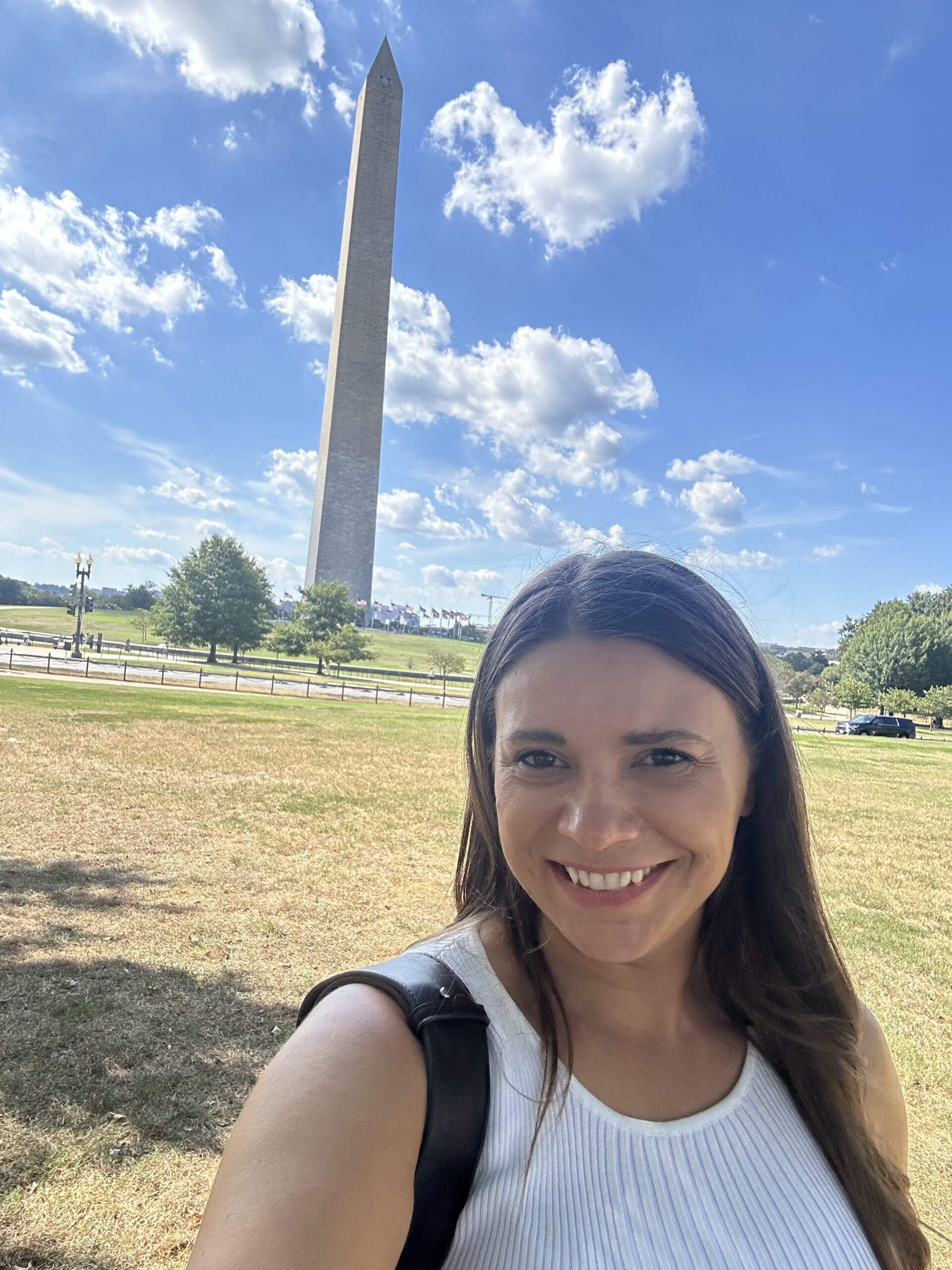
When Anna Denega, Richwood Bank’s Financial Literacy Manager, stepped off the train at Union Station for Financial Literacy Day in Washington D.C., she didn’t anticipate a moment that would deeply reconnect her with her family’s history.
A wrong turn led her to the Holodomor Memorial — a quiet monument honoring the millions of Ukrainians who perished in the man-made famine of the early 1930s. Standing there, Anna couldn’t help but think of her own grandmother — one of the children who survived that tragedy.
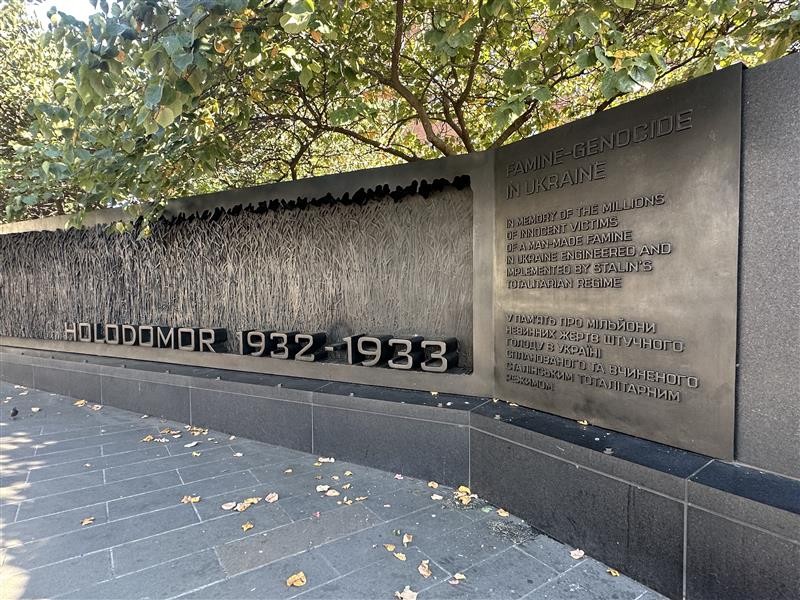
Her grandmother had been orphaned during the Holodomor, left to fend for herself and find scraps of food to survive. As an adult, she became a widow before the birth of her fourth child, raising her boys alone through the harsh realities of postwar life. Survival wasn’t just a goal — it was a skill passed down through necessity.
That same perseverance carried into the next generation.
Anna’s father knew what it meant to face uncertainty. In the early 1990s, he had carefully saved enough money to buy a car — a purchase that would make it easier to get to work. But then the Soviet Union collapsed, and with it, the value of his savings. Practically overnight, the money that once could have bought a car could now only afford a bicycle.
So that’s what he did. He bought the bicycle. Because the work still needed to be done.
Starting Over in America
Soon after, Anna’s parents made a brave decision — to leave everything they knew behind and move to the United States in search of religious freedom and a better life for their children. Anna was just four years old when they arrived, but the values her family carried across the ocean would shape her life in ways she didn’t fully realize until adulthood: work hard, save what you can, and never waste what you have.
Her parents worked tirelessly — her father juggled three jobs — while her mother worked and made every dollar stretch. The family grew vegetables, canned fruits and jams, and compared store flyers to find the best prices. An aunt would always call with updates on which grocery store had the latest deal. And little by little, those efforts added up. They built a life, and even managed to buy Anna her first car — a milestone that represented more than transportation. It was stability. It was success.
When Hardship Shapes How We Handle Money
Though Anna doesn’t remember much about living in Ukraine, the lessons of her family’s struggles still shape her approach to money today.
“Even now, I keep a close eye on my budget,” Anna says. “I like grocery shopping online because I can fill my cart and watch the total. If it’s getting too high, I scroll back through and remove what I don’t need. That’s something I learned from my mom — to be mindful of every purchase.”
Anna reflects that her family rarely spoke about the hardships they endured.
“They always focused on the good — on what we had, not what we didn’t,” she shared. “But I’ve realized that even when we don’t talk about the tough times, they still shape how we think about money.”
As our conversation continued, Anna reflected on how her grandparents and parents approached debt and borrowing with deep caution. For them, debt was something to be avoided at all costs. When you’re already living on the edge of making ends meet, taking on a loan you might not be able to repay feels far too risky. While such caution isn’t necessarily a bad lesson, it can leave the next generation without the tools to navigate credit or borrowing responsibly.
Much of what Anna learned came through observation, not conversation — watching her parents model sacrifice, resourcefulness, and gratitude. Those lessons became the foundation of her deep commitment to financial literacy for all.
From Lived Experience to Lifelong Purpose
Today, through Richwood Bank’s Financial Literacy Program, Anna helps students across the community understand how to budget, save, and spend wisely. Through classroom visits, interactive programs like Banzai, and local presentations, she gives young people the tools they need to make informed financial choices.
Her story resonates with students — not because they’ve lived through famine or political collapse, but because they recognize the authenticity behind it. Anna speaks from experience, from a life where every dollar mattered and every decision required thought. She isn’t just teaching financial concepts; she’s sharing lessons shaped by real challenges and hard-earned perspective. That sincerity gives her message credibility — and it’s why, when she talks about being intentional with money, students truly listen.
And while her work focuses primarily on students, Anna is quick to point out that financial literacy isn’t just for kids.
“Adults need it too,” she says. “Our parents and grandparents did the best they could with what they knew, but times change. We all deserve the knowledge to make smart financial decisions — whether you’re learning to balance a checkbook or preparing for retirement.”


Empowering Families to Learn Together
Research supports what Anna has discovered through her own life and work. A review published in Frontiers in Education in 2024 found that financial education programs are most effective when families learn together, reinforcing habits through discussion and shared decisions at home. And in some cases, the learning even flows both ways — a 2023 study from the Journal of Financial Literacy and Wellbeing found that parents of students who took part in financial education programs improved their own financial habits, showing that money conversations can benefit entire households.
Anna’s family history — one of hardship, hope, and perseverance — is a vivid reminder that financial habits are generational. Each generation learns from the last, consciously or not. Her grandmother’s survival taught resilience. Her parents’ struggles taught discipline and frugality. And now, Anna’s mission is to turn those lessons into empowerment — combining the wisdom of the past with the knowledge needed to navigate today’s financial world.
A Practical Tool for Parents: Start the Conversation Early
At Richwood Bank, financial literacy means more than numbers — it’s about empowering every person, at every age, with the tools to build financial confidence and lasting success.
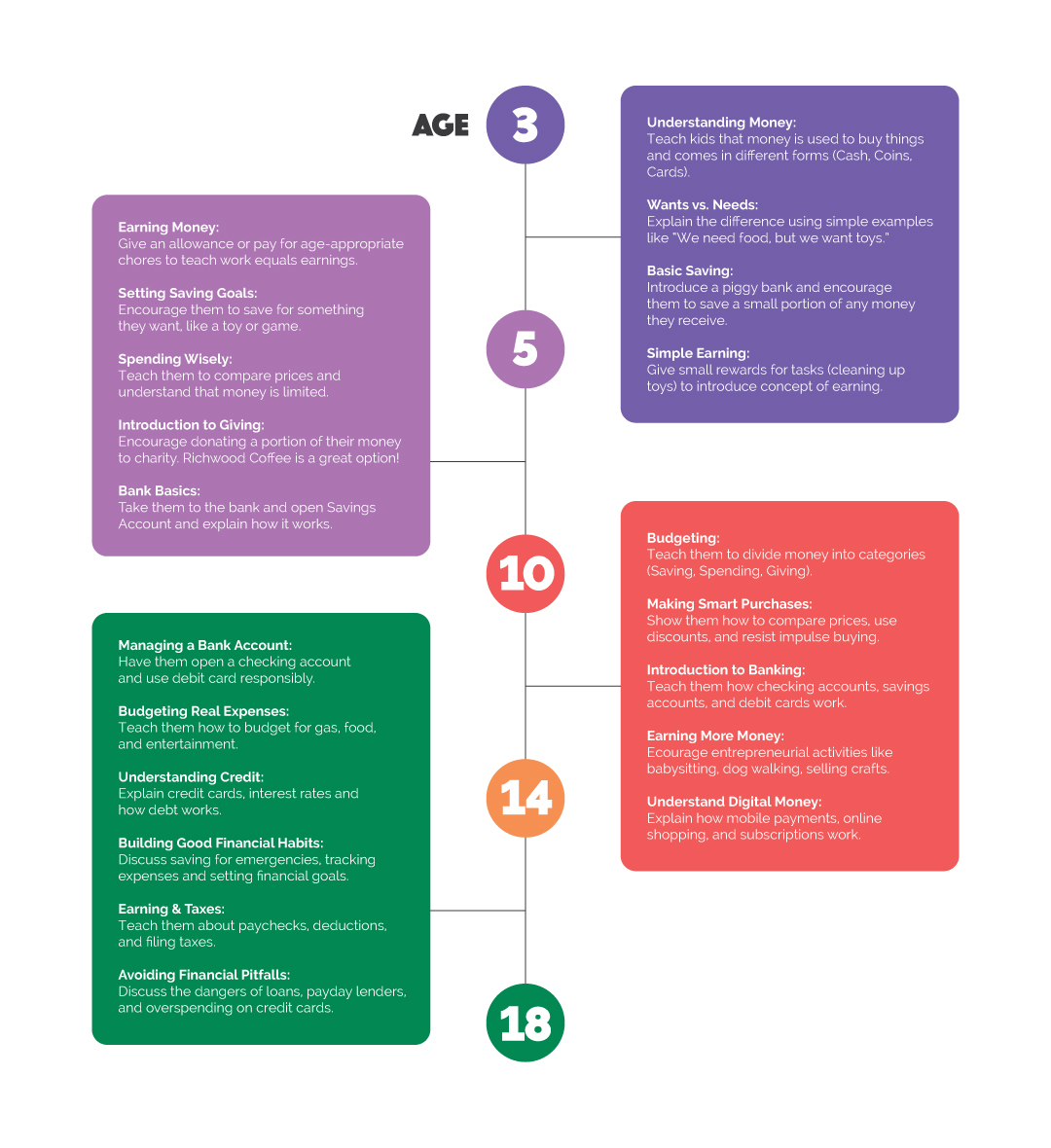
To help parents begin these conversations earlier, Richwood Bank has created an infographic with age-appropriate tips for introducing financial concepts to children. From preschoolers learning about needs vs. wants to teens exploring credit and budgeting, it’s a practical guide for building financial confidence at home.